How to Use ChatGPT Voice Mode for Language Learning: The Complete 2026 Guide
How ChatGPT Voice Mode Transforms Language Learning
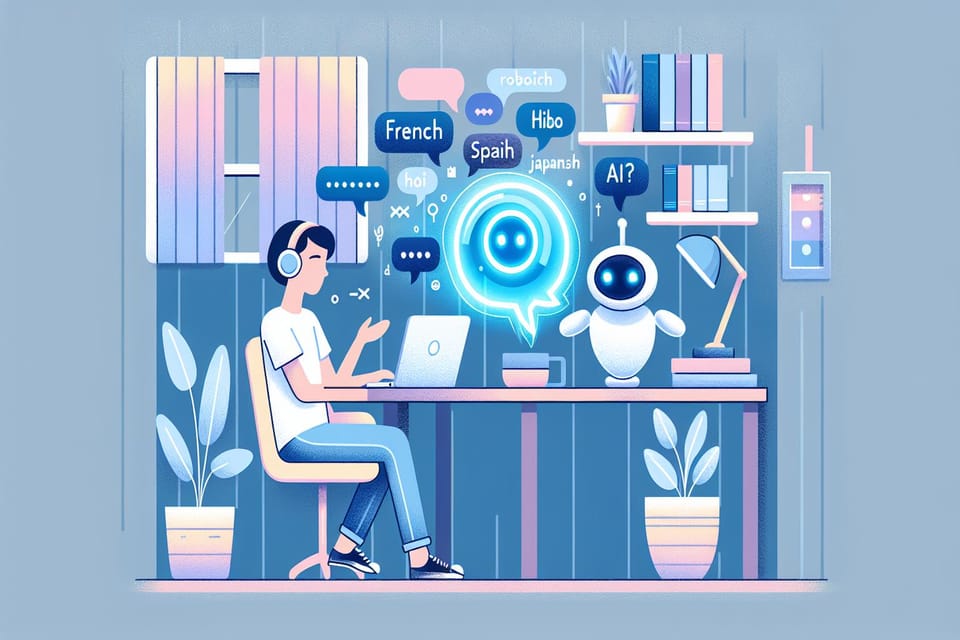
Learning a new language in 2026 means having a conversation partner available 24/7, one that never gets tired, always corrects your mistakes gently, and adapts to your exact level. If you're wondering how to use ChatGPT voice mode for language learning, you're tapping into one of the most significant shifts in self-directed language education this decade.
Unlike traditional language apps that follow rigid scripts, ChatGPT voice mode offers something revolutionary: genuine conversational practice that responds to your actual interests, mistakes, and learning pace. Whether you're a beginner stumbling through basic phrases or an advanced learner polishing your accent, this AI-powered approach can accelerate your progress in ways that weren't possible even two years ago.
In this guide, you'll discover exactly how to set up and use ChatGPT voice mode for maximum language learning results, including specific prompts, conversation strategies, and common pitfalls to avoid.
Why ChatGPT Voice Mode Works for Language Learning
The science behind conversational language learning is solid. Research published in the Studies in Second Language Acquisition journal consistently shows that interactive dialogue, immediate feedback, and low-anxiety practice environments dramatically improve language retention and fluency.
ChatGPT voice mode delivers on all three fronts:
- Real-time interaction: You speak, it responds naturally, maintaining conversational flow
- Instant corrections: Ask it to point out errors, and it will (without the embarrassment of a human listener)
- Zero judgment: Practice the same phrase 50 times if needed, no one's counting
- Adaptive difficulty: It automatically matches your level and can dial complexity up or down
- Unlimited topics: From ordering coffee to discussing philosophy, any subject is fair game
According to OpenAI's research team, the latest voice models understand natural speech patterns, accents, and can even detect pronunciation nuances, making them remarkably effective for language practice.
Setting Up ChatGPT Voice Mode for Language Practice
Getting started with ChatGPT voice mode for language learning takes less than two minutes. Here's the exact setup process:
Step 1: Access Voice Mode
- Open the ChatGPT app on your smartphone (iOS or Android) or access the web version
- Look for the headphone icon in the bottom right corner
- Tap it to activate voice mode
- Grant microphone permissions if prompted
Step 2: Configure Your Language Partner
Before jumping into conversation, set clear parameters. Start with this prompt template:
"I'm learning [TARGET LANGUAGE] at a [BEGINNER/INTERMEDIATE/ADVANCED] level. I want to practice conversational skills focusing on [SPECIFIC AREA: daily conversations/business/travel/etc.]. Please speak to me entirely in [TARGET LANGUAGE], keeping your responses at my level. Correct my mistakes gently after I finish speaking, and ask me questions to keep the conversation flowing."
This establishes context and ensures ChatGPT understands your learning goals. The more specific you are, the better the practice session.
Step 3: Choose Your Practice Mode
Different practice modes serve different learning objectives:
- Free conversation: Casual chat about daily life, hobbies, current events
- Role-play scenarios: Restaurant orders, job interviews, doctor visits, hotel check-ins
- Storytelling: You narrate an experience, ChatGPT asks follow-up questions
- Debate/discussion: Present arguments on a topic, practicing complex language structures
- Question drills: ChatGPT asks questions, you respond (great for exam prep)
10 Powerful Prompts to Maximize Your ChatGPT Voice Practice
The right prompt makes all the difference. Here are battle-tested prompts that consistently deliver excellent practice sessions:
For Beginners:
1. The Daily Routine Script
"Let's have a conversation about my morning routine in [language]. Ask me simple questions one at a time, and correct my grammar after each response."
2. The Word Expansion Drill
"I'll say a word in [language], and you create a simple sentence using it. Then ask me to create my own sentence with the same word."
For Intermediate Learners:
3. The Real-World Scenario
"Pretend you're a [barista/hotel receptionist/tour guide] in [country]. I'll interact with you in [language] as a customer. Stay in character and use natural expressions locals would use."
4. The Story Builder
"Start telling me a story in [language] but stop every few sentences. I'll continue the story, and you'll correct my grammar while adding your own continuation."
5. The Grammar Focus
"I want to practice [past tense/subjunctive/conditionals] in [language]. Have a conversation with me that naturally uses these structures. Correct me when I get it wrong and show me the right form."
For Advanced Learners:
6. The Debate Challenge
"Let's debate this topic in [language]: [topic]. You take one side, I'll take the other. Use advanced vocabulary and complex sentence structures, and point out when I could use more sophisticated expressions."
7. The Culture Deep-Dive
"Explain a cultural concept from [target country] in [language], then quiz me about it. I'll ask questions and discuss it with you, practicing idiomatic expressions."
8. The Pronunciation Coach
"Listen carefully to my pronunciation in [language]. After I speak, tell me specifically which sounds I'm struggling with and give me example words to practice. Let's focus on [specific sounds]."
Universal Prompts:
9. The Interest-Based Conversation
"I'm passionate about [your hobby/interest]. Let's have a conversation about it entirely in [language]. Ask me detailed questions and introduce related vocabulary I might not know."
10. The Feedback Session
"After our conversation, provide a summary of the 5 most common mistakes I made, the grammar points I should review, and 3 new phrases I could incorporate next time."
Integrating ChatGPT Voice Into Your Daily Language Routine
Consistency beats intensity in language learning. Rather than marathon sessions, aim for short, frequent practice. A 30-minute daily routine that includes 10-15 minutes of ChatGPT voice practice can yield remarkable results over weeks and months.
Here's a practical integration strategy:
- Morning (5 minutes): Quick greeting conversation while making coffee
- Commute (10 minutes): Role-play scenario practice (if you're not driving!)
- Lunch break (5 minutes): Describe what you're eating and your day so far
- Evening (10 minutes): Deeper conversation or debate practice
This spaced repetition approach aligns perfectly with proven retrieval practice schedules that help cement new vocabulary and grammar patterns into long-term memory.
Common Mistakes (and How to Avoid Them)
Mistake #1: Staying in Your Comfort Zone
It's tempting to keep conversations at your current level, but growth happens at the edge of your ability. Explicitly ask ChatGPT to introduce one or two new words or structures in each session.
Mistake #2: Not Asking for Corrections
ChatGPT won't automatically correct everything unless you specifically request it. Always include "correct my mistakes" in your initial prompt, or pause mid-conversation to ask, "What errors did I just make?"
Mistake #3: Ignoring Pronunciation Feedback
While ChatGPT's voice recognition is impressive, it's not perfect at catching every pronunciation error. If you're struggling with specific sounds, supplement with tools like IPA pronunciation guides or native speaker recordings.
Mistake #4: Treating It Like a Traditional Lesson
This isn't a textbook. The power lies in natural conversation. Stop asking "How do you say...?" every two seconds. Instead, describe what you mean using the words you know, and let ChatGPT model the proper expression naturally in its response.
Mistake #5: Neglecting Other Input Sources
ChatGPT voice mode is a powerful tool, but it shouldn't be your only learning method. Combine it with TV shows in your target language, reading, and, when possible, conversations with native speakers.
Advanced Techniques for Serious Learners
The Character Consistency Method
Create a fictional character identity and maintain it across multiple sessions. For example: "I'm María, a 28-year-old architect from Barcelona visiting Tokyo for a conference." This provides consistent context and helps ChatGPT maintain appropriate difficulty levels and relevant vocabulary.
The Recording Review Strategy
Record your ChatGPT voice sessions (many phones have built-in screen recording with audio). Listen back later to identify patterns in your mistakes and track improvement over time. This self-assessment is incredibly valuable and supported by research in metacognitive language learning strategies.
The Hybrid Approach
Combine ChatGPT with human interaction. Use voice mode to prepare for real conversations. Before meeting a language exchange partner or tutor, practice the specific topics you plan to discuss. This builds confidence and helps you arrive prepared with relevant vocabulary already activated.
The Specialized Vocabulary Sprint
Dedicate week-long sprints to specific vocabulary domains: medical terminology, business jargon, cooking vocabulary, etc. Ask ChatGPT to play scenarios that force you to use these terms repeatedly in context.
Measuring Your Progress
Track these metrics to gauge improvement:
- Response time: How quickly can you formulate answers?
- Vocabulary range: Are you naturally using new words?
- Error frequency: Fewer corrections over time is a clear signal
- Conversation length: Can you sustain longer exchanges without switching to English?
- Comfort with complexity: Are you attempting more sophisticated structures?
Consider keeping a language learning journal where you log your ChatGPT sessions, noting new words learned, persistent challenges, and breakthrough moments.
The Future of AI-Assisted Language Learning
As we move deeper into 2026, AI language learning tools continue to evolve rapidly. According to recent analyses from Pearson Education, we're seeing unprecedented personalization in language learning technology, with AI systems that understand not just what you say, but how you learn best.
ChatGPT voice mode represents just the beginning. We're likely to see enhanced accent adaptation, emotional intelligence in conversations, and even more sophisticated error analysis in coming updates.
But here's what won't change: the fundamental need for consistent practice, genuine curiosity, and willingness to make mistakes. Technology provides the tools, but your commitment drives the results.
Your Next Conversation Starts Now
You now have everything you need to transform ChatGPT voice mode into your personal language learning accelerator. The technology exists, the strategies are proven, and the only remaining ingredient is you actually doing it.
Start simple. Open ChatGPT voice mode right now. Use the beginner prompt if you're just starting, or jump straight into a role-play scenario if you're more advanced. Commit to just five minutes today. Then five minutes tomorrow. Before you know it, you'll be having conversations you couldn't imagine having when you started.
The barrier between you and fluency just got a whole lot lower. The question is: what will you say first?
What language are you learning, and what's the first conversation scenario you'll try with ChatGPT voice mode? Drop a comment below and let's practice together!