How to Actually Use TV Shows for Language Learning
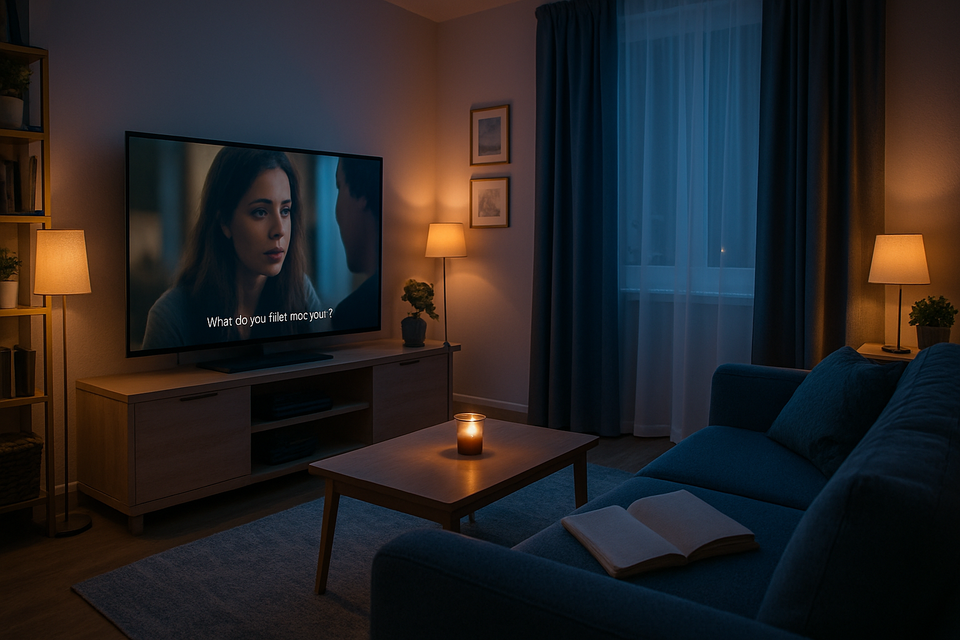
"Just watch Netflix in your target language!" they say. As if turning on Money Heist will magically download Spanish into your brain while you scroll Instagram.
The truth is more nuanced. TV shows can be incredibly powerful learning tools—research from multiple studies confirms they accelerate vocabulary acquisition and listening comprehension. But only if you use them intentionally.
Here's how to actually learn from what you watch.
The Passive Watching Trap
Let's be clear about what doesn't work: putting on a show in your target language while doing something else—cooking, scrolling, half-sleeping on the couch.
That's entertainment. It's not studying. There's nothing wrong with it, but don't count it as practice time or expect language gains.
Effective TV-based learning requires active engagement. The good news? It can still be genuinely enjoyable—often more so than textbook grinding.
The Layered Watching Method
For maximum learning, watch the same content multiple times with a different focus each pass. Yes, this means rewatching—choose content worth experiencing twice or three times.
First Pass: Native Language Subtitles
Watch for plot and enjoyment. Get invested in the story. This isn't cheating—it's strategic. You need to understand what's happening to benefit from the language input later.
During this pass, note moments where the spoken language sounds interesting, funny, or different from what you expected based on the translation.
Second Pass: Target Language Subtitles
Now that you know the plot, focus on the language itself. Read along while listening. Pause when the subtitles don't match what you're hearing—this reveals how spoken language differs from written.
This is where active learning happens. Your brain connects sounds to written forms to meanings you already understand.
Third Pass: No Subtitles
The real test of comprehension. How much can you follow without any textual support? You'll be surprised how much context helps when you already know the story.
Don't worry if you catch only 60-70%. That's normal and still valuable input.
Choosing the Right Shows
Not all content is equally useful for learning. For optimal results, look for:
- Contemporary settings: Modern, everyday vocabulary you'll actually use
- Dialogue-heavy formats: Action movies look cool but contain minimal useful language
- Clear speech: Avoid heavy regional dialects or period pieces initially
- Relatable situations: Workplaces, families, friendships provide more transferable language than fantasy kingdoms
Sitcoms and drama series generally work better than films for learners: more repetition of everyday phrases, recurring characters whose speech patterns you learn over time, and shorter episodes that fit study sessions.
The Sentence Mining Technique
This is where TV watching becomes genuinely powerful for vocabulary acquisition:
- When you encounter a useful phrase, pause immediately
- Write down the complete sentence (use target language subtitles)
- Note the episode and timestamp for future reference
- Add to your Anki or spaced repetition system—ideally with audio
Now you're not memorizing random vocabulary—you're learning language in context, with native pronunciation, connected to a memorable scene and emotional moment.
Tools like Language Reactor (Chrome extension) make this process dramatically smoother, letting you save sentences directly with a click.
The Shadowing Technique
Shadowing means repeating what you hear almost simultaneously, mimicking rhythm, intonation, and pronunciation as precisely as possible.
For TV implementation:
- Pick a short scene (30-60 seconds maximum)
- Watch it several times until you're familiar with the rhythm
- Play the audio and speak along with the characters, slightly behind
- Match their speed, emotion, and intonation—not just the words
- Repeat until you can deliver the lines naturally
This builds pronunciation, natural rhythm, and conversational phrasing more effectively than any textbook drill. It's also surprisingly fun once you get into character.
Platform-Specific Tips
Netflix: Use the language learning extensions. Change audio AND subtitle languages independently. Many shows have multiple subtitle options.
YouTube: Use auto-generated subtitles with caution—they're often inaccurate. Channels made for language learners usually have proper subtitles.
Disney+: Excellent for re-watching familiar content (you already know Pixar plots) in new languages.
My Show Recommendations by Language
- Spanish: La Casa de Papel, Élite, Club de Cuervos (Mexican Spanish), Las Chicas del Cable
- French: Lupin, Call My Agent (Dix Pour Cent), Family Business, Marseille
- German: Dark, How to Sell Drugs Online (Fast), Babylon Berlin
- Korean: Reply 1988, Hospital Playlist, My Mister, Crash Landing on You
- Japanese: Terrace House, Midnight Diner, Aggretsuko, Alice in Borderland
- Italian: Suburra, Baby, L'Amica Geniale
Realistic Expectations
TV learning works best as a supplement, not a replacement for structured study. It excels at:
- Improving listening comprehension dramatically
- Learning colloquial expressions and slang
- Building natural pronunciation through shadowing
- Maintaining motivation through genuine enjoyment
It's less effective for:
- Building foundational grammar (use references as needed)
- Developing speaking ability (unless combined with shadowing)
- Learning formal or written language
For a complete daily routine that incorporates TV watching strategically, see our 30-minute routine guide. And if you're curious about why some people learn faster, the answer often involves more input from engaging sources like TV.
The bottom line: the best show for language learning is one you'll actually want to rewatch. Let genuine interest guide your choices.
What shows have accelerated your language learning? Drop your recommendations in the comments—I'm always looking for new content to add to my watchlist.